Intro
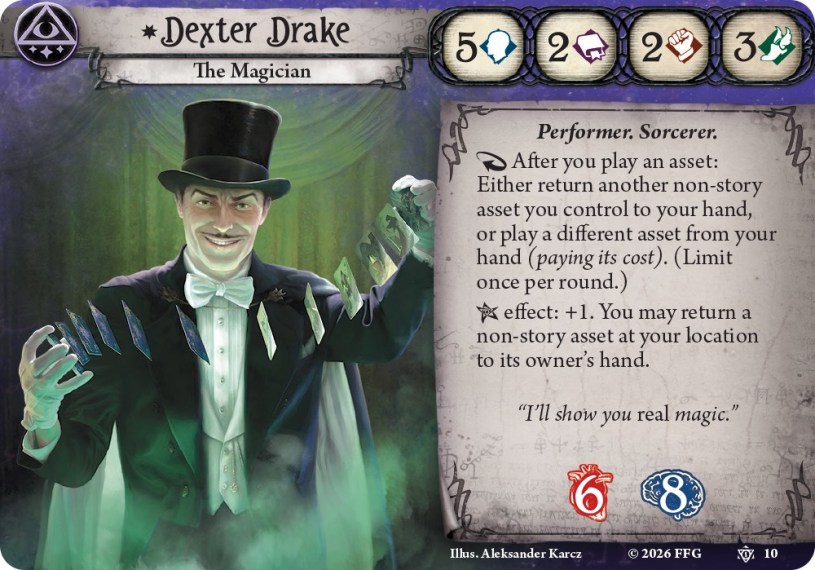
With the new Power of the Dreamlands preview article, a new keyword and a slew of new cards have been previewed. Like many in the community, I have been thinking about what to do with these new cards. After a few thought experiments, I finally got an idea that I am ready to pitch to the light of the day – unlike the new Ally form of Luke Robinson who is about to be asleep forever thanks to his good buddy Dexter Drake. (Don’t worry, Luke is chill about it!) In this article, I present to you my take on a Power of the Dreamlands deck with Permadreaming Luke.
Also note: I’m staying in Current for this deck building but you could 100% make something in Legacy with this and you would have way more options. Most of the cards are taken from Power of the Dreamlands anyway, so if you are working with a different card pool then you can adjust everything else as needed or desired. A lot of the dreaming cards interact mainly with other dreaming cards so there is less demand to fill out the deck with older cards than in some different deck concepts which are more flexible or broad.
Dexter Drake & Power of the Dreamlands
First things first, I need to say Chapter 2 Dexter Drake is probably one of the biggest winners of Power of the Dreamlands.
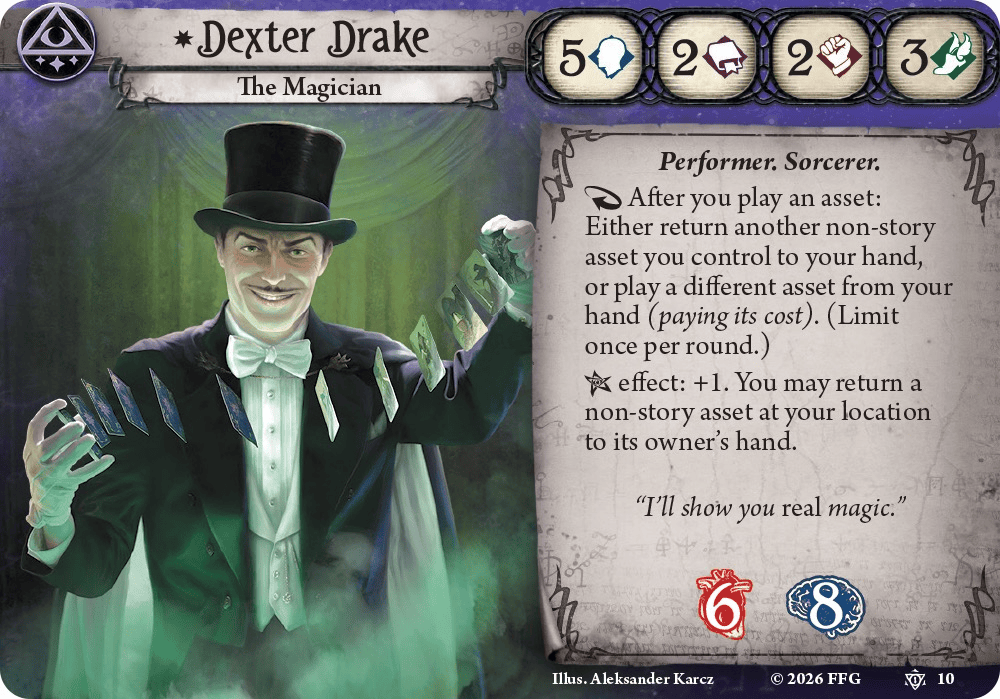
Dexter’s investigator ability is all about playing assets and the new dreaming keyword is tied to doing that. Note that the text on Dexter doesn’t say “when an asset enters play” or anything like that. This means that Dexter’s ability works even when the dreaming card is still face down. Therefore, with the dreaming keyword, Dexter can put out dreaming assets, critically not spending any resources to do it, and then getting the opportunity to play another asset. Since the dreaming assets don’t cost resources, you don’t have to worry about how expensive it is to be tossing out multiple assets each turn.
Now you might be thinking, ok, you got my interest. Dreaming Dexter sounds like it’s got some promise. But hold on, it gets better because of the cards previewed in the article. Particularly the neutral card Call of the Dreamlands.

So this card is absolutely bonkers in a Dreamlands based deck. As we know, Dexter can already search his whole deck for a Spell or Item card and play it at reduced cost because of his signature event. Depending on how you build your deck, you can think of this a mini second and third copy of Dexter’s signature event. Yes, 9 cards is not the whole deck but even at the start of the game, you will be searching about 1/3 of your deck. That’s a LOT of your deck. And, if you built it with a lot of Dreamlands cards (and we are planning to do that in this article), then you should always be finding something and playing it. Again, because this card fully lets you play the card you find, this triggers your investigator ability, which means you can then play another asset right after. This means you could be playing something off of Call of the Dreamlands, then a different dreaming card from your hand, and have spent 0 resources.
But wait! With XP, it doesn’t stop there either.
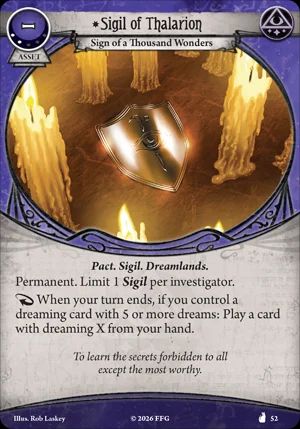
With Sigil of Thalarion, if you have a card with 5 or more dreams in play, you can play ANOTHER card when your turn ends! Yes, it’s limited to a card with a dreaming value on it, but again, we are building a dreaming deck & many of the cards we have here in the first place will have dreaming X. And if for some reason you haven’t used your investigator ability yet during the round, well, you know the drill by now I am sure. If you played an asset, this can also trigger it!
The big speed bump to this plan is that you can only have 3 dreaming cards in play, so you can’t just toss out facedown cards nonstop. And, as you may have guessed by the intro of this article, among those 3 dreaming cards is 1 card that we plan to stack dreams on indefinitely and not flip over. So really we have only 2 dreaming slots to play with for things that are intended to be flipped over. This means to get value out of our ability repeatedly we also need to have some non-dreaming cards too or else we will be blocked from playing more assets. Not to worry, as we are accounting for this!
Dreaming of Assets
So we see that we want to play dreaming assets. What do we have that is of interest? Well, so far a few things for sure. Let’s start with level 3 Lunar Sight and Reality Fracture.
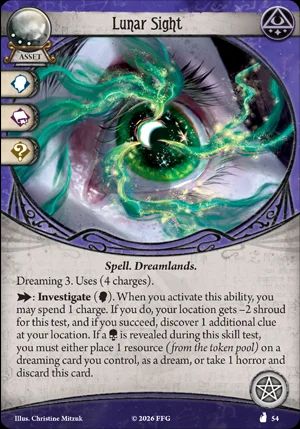
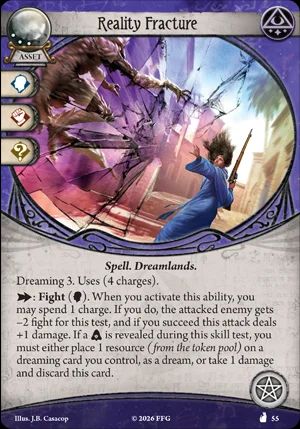
I would assume that there are level 0 versions of these cards based on how Mystic spell asset suites typically work. But that’s not confirmed so we will just look at what we have here so far.
First of all, these cards reduce the difficulty of the test by 2 rather than give you +2 Willpower. This difference notably makes these cards way stronger. This is because they can reduce the difficulty of certain tests to 0, at which point you are basically only losing to the autofail.
Secondly, you should note that these cards are usable even if you don’t have charges on them. Spending the charge is optional & is simply used to activate the bonuses on the test. If you want to, you can not use the charge and investigate or fight with your Willpower in a more basic way. Given that Dexter’s Willpower is 5, he’s going to be happy enough to fight for 1 damage or investigate for 1 clue here and there and conserve a charge. That kind of flexibility is another reason that these assets are awesome. This is in line with the Core/Starter Mystic spell assets in Chapter 2 as well, but it is still worth pointing out.
Now the big risk with these spells is in their backlash effect. If you draw the specific symbol token on them, you have to either add a dream to a dreaming card or take a damage or horror hit and discard the card. To frame it another way, if you draw the designated token and you don’t have a dreaming card out, you MUST discard the asset.
Potentially, that can be horrendous because you could for example draw the token on the very first test you do with it and then immediately lose the asset. That could be a significant waste! So to mitigate this downside, we need to have a dreaming card in play.
And to make it even better, here’s another thought. What if we fully just don’t even care if a dream has to be added to that dreaming card? What if we actually appreciate that happening? This way not only are we avoiding being forced to discard our spell asset, we are getting more dreams stacked up.
A Big Stack of Dreams
And as we know from Sigil of Thalarion, having a lot of dreams on 1 card can actually be a good thing! We’ve looked at Sigil already, but there is another card we can look at.
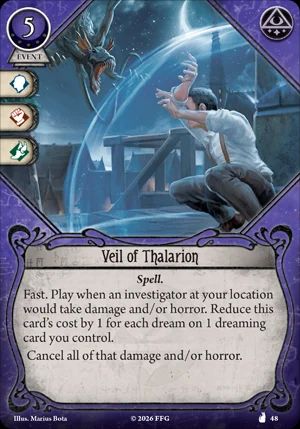
Veil of Thalarion is a huge support card that works perfectly for what we are going for here. Since we are already planning to stack up dreams on a single card, we can expect to play Veil of Thalarion at low cost and perhaps even 0 quite reliably. Canceling all damage or horror dealt to an investigator can be a huge effect! For example, if an enemy were to say deal 3 damage and 3 horror to your teammate, you can play this card for 0 resources to have them take nothing instead, all at level 0. And even if it isn’t quite free, it will still be a worthwhile play when heavily discounted to save yourself or a teammate.
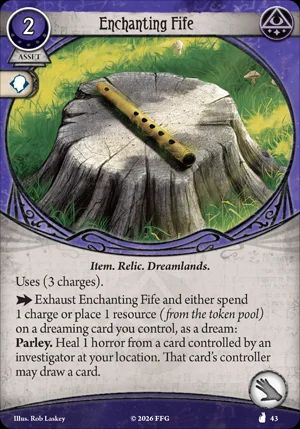
While on the topic of supporting your team by helping them not die, Enchanting Fife also makes an investigator heal a horror and draw a card. AND, in the case of this deck, you can use it to add a dream to a card you control! Because we are planning to stack dreams up on a designated dreaming card, we are assuming this is a good thing.
To show the value of this card, think about how often you just do a basic draw action in a game. With Enchanting Fife, that draw also comes with a horror heal. In multiplayer, you can use this to support a teammate as well by giving them the draw and heal. We are not even worried about running out of charges here because we are going to stack dreams instead, so this Fife will keep going and going. And to get more value out of the horror healing, we are bringing Ward of Protection and Soul Link.
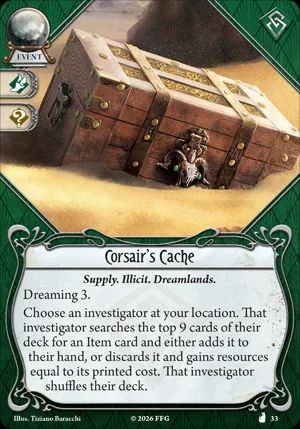
Another card from the preview article that I want to highlight for Dexter is Corsair’s Cache. As we have established, Dreaming Dexter has great support potential and Corsair’s Cache helps you even more with that. You can use this to help you or another investigator find a card in the future. Dexter needs extra assets in his hand if he wants to make use of his ability, and finding an Item from Corsair’s Cache can help do that. However, even if this helps Tommy find a gun or Carolyn find a tome, that’s very useful! Alternatively, it can turn into some resources with the discard effect. You may have a Survivor teammate who enjoys all of that! While there is a delay in when this goes off, if you get this early enough, it’s likely to be valuable whenever it does happen especially if there are more investigators to choose from in your party.
Side note: Corsair’s Cache can also serve as your back up permadreaming card if you can’t find Luke for whatever reason. Whenever you do get your main permadreamer out, then just let this flip and get the benefit. This is okay to flip at almost any point in the game, so it’s not a big deal if it gets delayed.
Luke Robinson Dreams Forever
So by now we have established the benefit of having a card that is permadreaming. It allows you to trigger card effects that care about having a high number of dreams on something, it gives you an easy outlet for cards that add dreams as a cost, and it mitigates the effects of cards which use adding dreams as a punishment.
Now the question is what card is our main candidate for permadreaming duty? Well, there is an easy answer and it is the new Luke Robinson ally.
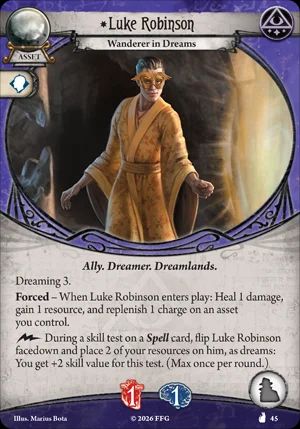
Now you might look at this card, and see the Forced effect, and think “Okay, so I want to flip this over and over and over. That means I DON’T want lots of dreams on it.” In some decks, you could. However, I believe that’s going to be a bit of a trap, at least for this deck concept. The Forced effect is more of something that is nice to have. You don’t get punished for Luke flipping, but you generally are trying to stack dreams on him instead of flipping him over.
The main reason Luke is the target for permadreaming is because you can make him dream again if he does flip as a free trigger (and doing so also can be part of helping you pass a skill test). Critically, this can happen during the skill test for Lunar Sight or Reality Fracture, reducing the risk of losing those cards. More generally, being able to flip Luke back down means you are unlikely to lose your dreaming set up forever. You can just flip your permadreamer back over if it hits 0 for whatever reason. And again, it’s okay if he flips because you get a little bonus too when it happens. If not for Luke being able to go back to bed, you could stack your dreams on a card that you don’t want to have flip, that card does flip due to something not planned for [author’s note: it’s Arkham Horror after all], and now you are stuck without a card that holds the stack of dreams you were building up. Thanks to Luke Robinson, you can do your other dreaming nonsense like spamming Enchanting Fife and discounting Veil of Thalarion in peace because you know Luke is always there to hold your big stack of dreams.
What Else Is In Here?
We don’t have the full list of cards available so we don’t know yet what other setup or payoff cards might go in this deck. However, based on what we know so far, we can round out our deck with Core and Starter staples based on what role we want Dexter to take.
If we want him to fight, we can take Cosmic Flame. If we want him to investigate, we can take Second Sight. Evasion can be pretty useful either way, so we could also take along Shadowmeld.
For an investigating Dexter, an example asset slot spell suite could be 2x Second Sight, 2x Lunar Sight, and 2x Shadowmeld.
For a fighting Dexter, you could do 2x Cosmic Flame, 2x Reality Fracture, and 2x Shadowmeld.
Finally, if you want to go all in on being a dreamer, you can do 2x Lunar Sight, 2x Reality Fracture and 2x of whatever you think is important.
Now usually because asset slot spells tend to be expensive, you want extra economy in an asset based Mystic like Dexter. However, dreaming lets us get away with less. You could still take 2x Emergency Cache just to be safe.
Then, we can take Spiritual Intuition.
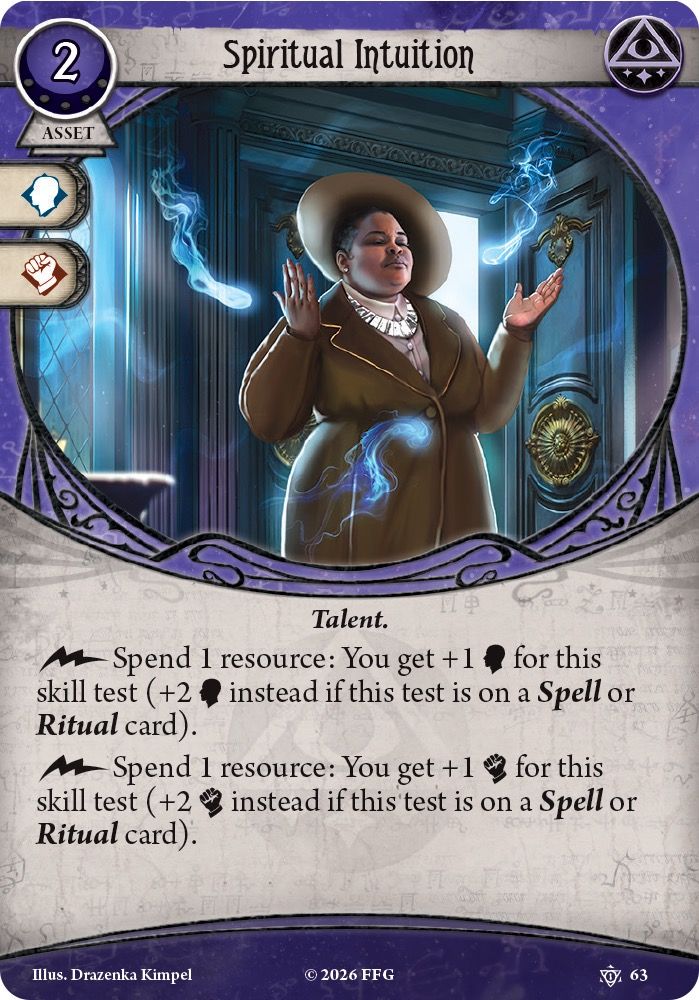
Spiritual Intuition serves an outlet for all the resources we are saving from playing dreaming cards. We could also take Silver Tongue if we wanted to go that route instead! However, if our goal is to investigate or fight, this card helps more with that as we want to succeed on our Spell tests.
I also really like Bloodstone as a cheap asset you can toss out! Lucky Cigarette Case is also a good option for an accessory as Dexter can easily be testing high values, and the card draw can be meaningful.
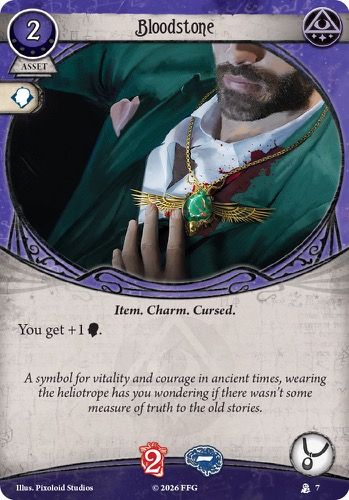
There are also plenty of generally good events that are good here as well. Some examples are Ward of Protection, Will of the Cosmos, and Premonition. Basically take whatever you think will help round out your deck. Even Pay Your Dues could be very good because Dexter is likely to be able to afford the X value.
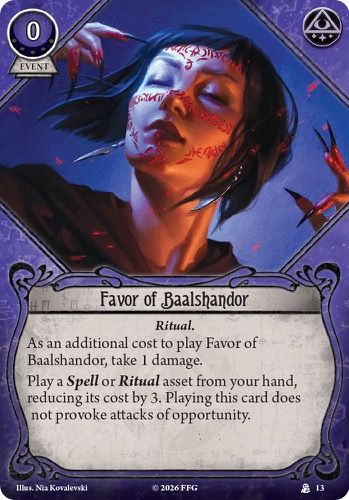
One card I would not recommend is Favor of Baalshandor. Now, I do really like this card most of the time, but I don’t care for it in this archetype. It doesn’t really help us with our dreaming set up and we don’t really like the damage hit either. We just aren’t getting much out of this, and we would prefer having plain old resources available for things like Spiritual Intuition. That’s why I recommend Emergency Cache over this if you do want more economy.
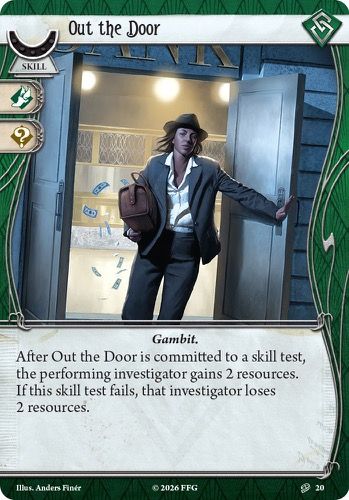
Finally, round out your deck with a good suite of skill cards. Guts and Soul Link are some workhorse skills that I enjoy using. If you are planning to save your resources, Easy Street can be good too as it becomes better than Unexpected Courage with at least 6 resources in your pool. Out the Door and “Watch this!” can also help you get more resources if you are still needing money. Also with Out the Door, you can take the resources to flip Luke Robinson back down when testing on a Spell. And of course, Unexpected Courage itself is also fine.
Sample List for Permadreaming Luke
Investigating & Support version
(Some XP required based on what we know now but potentially none to start if there are indeed level 0 versions of the dreaming spell assets.)
Assets
2x Luke Robinson
2x Lunar Sight
2x Second Sight
2x Shadowmeld
2x Enchanting Fife
2x Spiritual Intuition
2x Bloodstone
Events
2x Call of The Dreamlands
2x Will of the Cosmos
2x Corsair’s Cache
2x Ward of Protection
2x Veil of Thalarion
Skills
2x Guts
2x Soul Link
2x Out the Door
Conclusion
Overall, I think this concept has some promise but I will have to try it out and refine it when the new set releases. This list is probably not the optimal final version of the permadreaming concept for Mystics as we don’t see all the cards. However, we have enough shown here to see the value of permadreaming and with more payoff cards like Veil of Thalarion, permadreaming could be even better. You can use the strong dreaming asset spells to fulfill a main role like fighting or investigating and then use other cards to bring some support for the team. Your economy is helped by dreaming cards not costing resources and your actions are helped by Dexter’s investigator ability. That’s a great recipe for success in general!
That’s it for me for now but hopefully you enjoyed my little theoretical deckbuild for the new set. Stay tuned because I plan to do more as cards are revealed.

